
Whether You’re Planning Ahead Or Navigating a Loss Right Now, I’m Here To Help.

End-of-Life Doula, Funeral Celebrant and Author, 18+ years supporting Queensland families

About Us
VITA Life and Legacy
Most families are never taught what to do when someone is dying, or how to plan ahead before they need to. VITA Life and Legacy exists to change that.
Whether you are planning ahead, supporting someone at the end of their life, or navigating loss, this is a place where you will find compassionate guidance and a steady hand to help you through.
Kerry Tully is an experienced Funeral Celebrant, End-of-Life Doula, and Author with over 18 years in the field. She works with individuals and families across three areas of support, each one designed to bring clarity and calm when it is needed most.
For those who want to plan ahead, Kerry helps you document your wishes, organise your affairs, and put everything in place so the people you love are not left guessing.
When someone is approaching the end of their life, Kerry provides compassionate, practical guidance every step of the way, from emotional support through to bedside vigil care, so no one has to face that season alone.
And when the time comes to farewell someone you love, Kerry creates meaningful, personalised ceremonies that truly honour who they were. From traditional funerals and memorial services through to ashes scattering and pet memorials, every service is crafted with care, dignity, and heart.
Wherever you are in this journey, VITA Life and Legacy walks alongside you. I don't take over. I guide you through it, so you stay in control of the decisions that matter.
How can we help you?

Funerals &
Memorials
Planning a farewell for someone you love is one of life's hardest moments. I'm here to guide you through it with care, creating a meaningful ceremony that truly reflects the life and legacy of your loved one.

End-of-Life
Doula
You don't have to do this alone. As an end-of-life doula, I provide practical, emotional and spiritual support for individuals and families, offering a steady, caring presence when it matters most.

The Complete
End-of-Life Planner
Planning ahead isn't about death - it's about love, legacy and peace of mind. Explore The Complete End-of-Life Planner and other resources to start your journey toward feeling organised, prepared and truly ready.

Resources and Helpful Connections
Explore a range of organisations, support services, and practical resources to help you navigate ageing, illness, end-of-life planning, grief, and loss with confidence.

The Complete
End-of-Life Planner
Most Australians leave their family with no plan. This book changes that. Record your funeral wishes, life story, digital passwords, important documents, and heartfelt letters to loved ones - everything your family needs, all in one place.
Gives your family clarity during an emotional time
Keeps important personal, legal, and practical information in one place.
Allows your wishes to be known and respected
Helps reduce stress and uncertainty for loved ones
Provides peace of mind for you and the people you love
Blogs & Stories
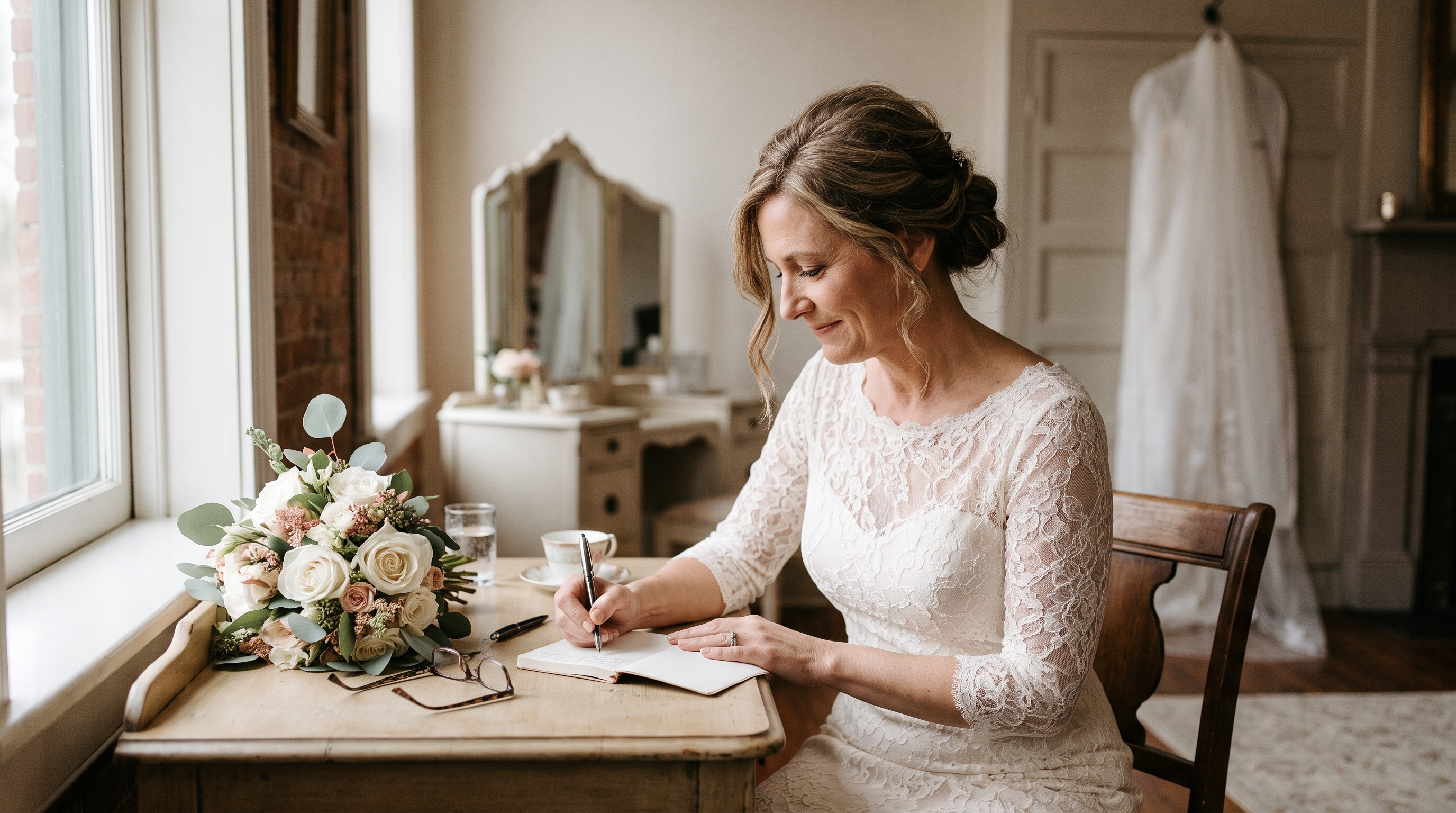
How to Write Your Wedding Vows (Without the Panic) | VITA Weddings
You've decided to write your own vows. You open a blank document, type "I love you because..." and then stare at the cursor for twenty minutes.
If that's you right now, you're in very good company. Most people have never written anything like this before, and it's one of the things couples tell me they're most nervous about. The good news is that the best vows sound like you, talking to the person you're marrying. No poetry degree required.
The quick answer
To write your wedding vows, start by jotting down memories and qualities you love about your partner, then shape them into a simple structure: something about them, something about the two of you, and the promises you want to make. Aim for about one to two minutes when read aloud, and practise saying them out loud before the day.
And if you'd rather not write your own? That's completely fine. In Australia you need to say a short legal vow to be married. Personal vows are an optional extra.
Before you write: a few things to agree on together
A quick chat with your partner saves a lot of awkwardness later. Agree on:
Roughly how long your vows will be, so one of you isn't reading a novella while the other says three lines.
The tone. All heartfelt, a bit of humour, or a mix?
Whether you'll share them before the day or keep them a surprise. (If you keep them secret, your celebrant can check both sets to make sure they're a similar length and feel.
How to start: brainstorm first, write later
The hardest part is the first sentence, so don't start there. Start with a list.
Grab a notebook (or your phone notes) and answer a few of these questions. Don't worry about wording yet.
When did you first realise this was someone special?
What's a small, everyday thing they do that you love?
What do they make easier, better or funnier in your life?
What have you been through together?
What do you want your life to look like in ten years?
What would you want them to remember on a hard day?
You'll usually find two or three answers that make you smile, or get a bit teary. Those are your vows.
A simple vow structure that works
You don't need a formula, but a loose shape helps. Here's one that suits most people:
Open with them. Start by speaking directly to your partner. Something you love about them, or the moment you knew.
Share a little of your story. One specific memory or detail. Specific is what makes vows feel personal.
Make your promises. Three or four is plenty. Mix the meaningful with the everyday.
Finish with a closing line. Something simple you could say while looking them in the eye.
Here's how that might sound in practice:
Sam, you're the calmest person I know, even when I've locked us out of the house again. I knew you were the one when you drove an hour in the rain just to bring me soup. I promise to always listen, to support your dreams even when they involve more camping than I'd like, and to keep making your coffee exactly the way you like it. Today I choose you, and I'll keep choosing you.
Notice what's in there: a real-feeling detail, a gentle bit of humour, practical promises and a clear ending. That's all you need.
How long should wedding vows be?
About one to two minutes each when spoken, which is usually somewhere around 150 to 250 words. That's long enough to say something real and short enough to keep everyone with you.
Read them out loud with a timer. You'll be surprised how different writing feels from speaking, and on the day you'll probably talk a little slower than you think.
Getting the tone right
The best vows sound like the person saying them.
If you're naturally funny, a bit of humour is wonderful. Just keep it kind, keep it about the two of you, and avoid anything that needs a backstory or would make your partner (or their gran) squirm. A good rule of thumb is to let the jokes warm people up and the promises carry the weight.
If you're not a words person, keep it simple. A few honest sentences said with meaning will land far better than something borrowed that doesn't sound like you.
And try to avoid the big generic phrases. "You're my everything" is lovely, but "you're the only person who laughs at my terrible puns" is the line people will remember.
When the words won't come out
Writer's block with vows is very common. A few things that help:
Talk instead of write. Record a voice memo telling a friend why you love your partner. Then type it up.
Write a terrible first draft on purpose. Nobody will see it. Editing is much easier than starting.
Write a letter instead. "Dear Sam..." often flows more easily than "My vows". You can shape it into vows afterwards.
Use the questions above and answer just one. That might be enough to get going.
Step away. Some of the best lines arrive in the shower or on the drive to work.
Ask for help. Your celebrant has heard a lot of vows and can help you shape your ideas into words that feel natural to say.
Practising on the day
Print your vows or write them on a card. Reading from your phone works, but it doesn't look great in photos and notifications have a terrible sense of timing.
Practise out loud a few times, ideally with a microphone if you'll be using one. You don't need to memorise them. Nobody expects you to.
And if you get emotional halfway through? Take a breath, have a sip of water, and carry on. Guests love it, and it's one of those moments that makes a ceremony feel real.
Frequently asked questions
Do we have to write our own wedding vows? No. In Australia you each need to say a short legal vow, and your celebrant will guide you through it. Personal vows are optional.
What should wedding vows include? Something about your partner, a little of your story and a few promises. Beyond that, it's up to you.
Should our vows be the same length? Roughly, yes. It feels more balanced for both of you.
Can our vows be funny? Yes. Humour works well when it's kind and balanced with some sincere promises.
Should we keep our vows secret? It's your choice. Some couples love the surprise. Others prefer to share them beforehand to feel more prepared.
Do we have to memorise our vows? No. Reading from a card is completely normal.
Can our celebrant help us write our vows? Yes. Depending on your package, I can offer vow guidance, templates or one-on-one support.
You don't have to do this alone
Writing vows can feel like a big task, but you already know everything you need to say. Sometimes it just takes the right questions to help it come out.
If you'd like a hand, [let's have a chat about your wedding], or take a look at my [wedding ceremony packages] to see which ones include vow-writing support.

Words of Appreciation


In our time of sadness and sorrow, Kerry was wonderful. From the moment we met her she was compassionate and understanding. She advised and made recommendations that were suitable to our needs and requirements. It was so comforting to have her guide us both in our time of sadness. Kerry’s very down-to-earth approach, put my wife and I at ease, as we both felt more than comfortable with Kerry’s way of explaining things and guiding us. Dave
Kerry, I wanted to thank you for the service on Friday. It was absolutely beautiful. Perfect in every way. Your attention to detail made the day so special and something I will never forget. Thank you for going over and above your role and being so accommodating when changes were through at you. You are an amazing person and we are truly grateful. Michelle
Kerry was a huge help in organising the funeral. She kept a level head when we were consumed with grief.
Kerry delivered a very personal touch, and it was very evident that she takes great joy in being able to do the very vest in presenting a celebration of your loved one’s life.
She organized so much for us, from putting together the order of service and liaising with the Funeral Directors, to making sure everything ran smoothly on the day.
Kerry also made sure that people who worked with and had an association with Dad know of his passing. Such a caring and genuine lady.
Karen
Kerry really excelled herself in assisting with the entire ceremony, not only presenting on the day but in preparation.
From contacting and notifying key invites from various organisations. Providing items for display, organising a bagpiper to play at the service, preparing order the of service and providing the family with a compilation of Dads life in a beautifully presented memorial booklet including the Eulogy and service outline.
Kerry managed to fill so many voids in the preparation and handling making everything less stressful for the family and bringing the whole day together perfectly.
Lindsay
FREE Downloadable

ANNUAL PEACE OF MIND CHECKLIST
Most people review their car registration every year without a second thought.
But the important documents, accounts and plans that actually protect your family and your future often get left untouched for years.
Life moves quickly. Marriage, divorce, children, health changes, moving house, ageing parents, financial shifts and changing wishes can all mean your paperwork and planning no longer reflect where you actually are.
If you've been meaning to sort this out but haven't quite gotten there yet, you're not behind. You're just human. Most people feel exactly the same way, they just don't say it out loud.
This checklist is designed to make that yearly review simple, so peace of mind becomes something you maintain, not something you chase once a decade.
Who Is This Checklist For?
This checklist is for:
Adults who want to stay organised and prepared
Families managing growing responsibilities
Anyone reviewing a will, Power of Attorney or other planning documents
People who want to feel more in control of life admin, without the overwhelm
If you're the person your family relies on to keep things running smoothly, this checklist was built with you in mind.
What's Inside the Checklist
Your yearly review will guide you through:
Personal identification and legal records
Digital accounts and passwords
Health and medical information
Family and care responsibilities
Financial and banking details
End-of-life and legal planning documents
Emergency preparedness
Insurance policies
Home and property maintenance
Utilities and household accounts
Download your free Annual Peace of Mind Checklist
Because the kindest gift you can give your family is preparation, and it starts with knowing where you stand today.
Meet Kerry Tully
Kerry is the Founder of VITA Life and Legacy, Funeral Celebrant, End-of-Life Doula, End-of-Life Specialist, and author of The Complete End-of-Life Planner.
This work is not just my profession. It is deeply personal.
I have experienced loss in some of its most tender forms, including the grief of losing my son, my father, my grandparents, and dear friends. Each of those losses shaped me in ways I still carry. It was after losing my grandfather that I felt a quiet, certain knowing: when the time came for my grandmother, I wanted to help with her farewell. That moment became the beginning of everything.
Over the past 18 years I have had the honour of supporting countless families through life's most significant moments, creating ceremonies that are deeply personal and meaningful. Every farewell has only deepened my belief that how we mark the end of a life truly matters.
That belief is what inspired me to write this planner. Because everyone deserves clarity, and a calm, structured path through what can otherwise feel like an impossible process.
My hope is simply this: that you feel less alone, more prepared, and quietly confident that the things that matter most are taken care of.







© Copyright 2026. VITA Life and Legacy. All rights reserved.