
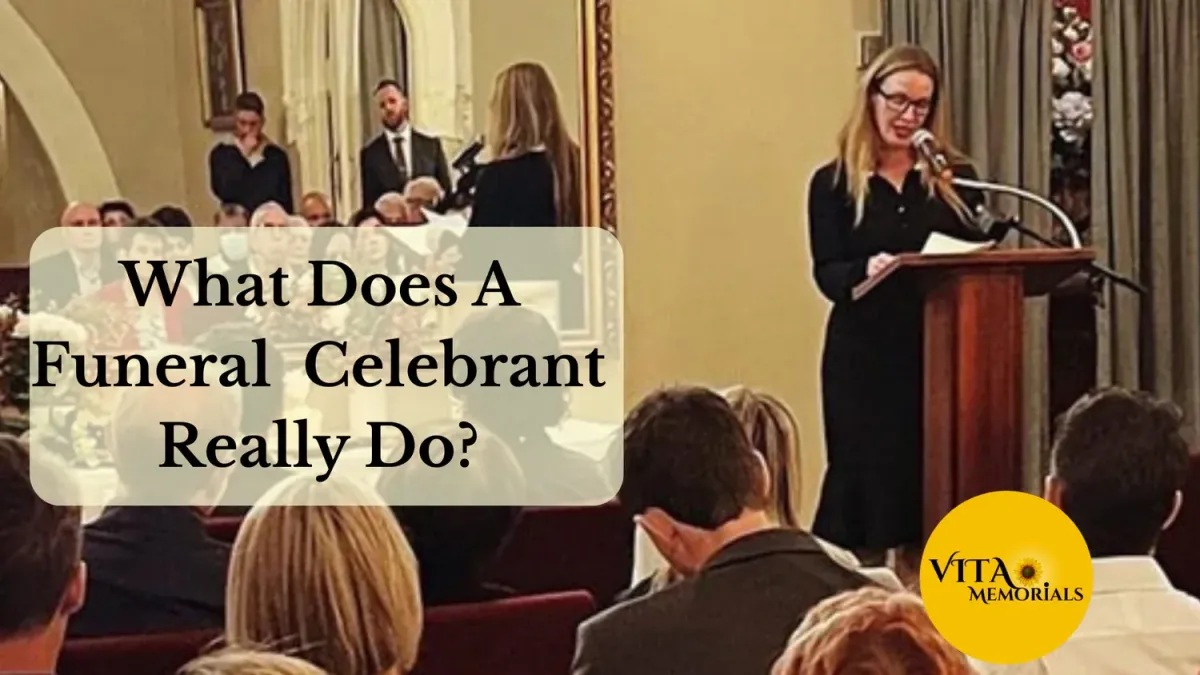
What Does a Funeral Celebrant Really Do?
What most people don’t see is the care, preparation, and compassion that happens long before the service begins.
Most people think a funeral celebrant simply stands at the front and reads a few words.
The reality?A funeral celebrant is one of the quiet anchors holding everything together during one of the hardest days a family will face.
Behind every meaningful farewell is deep listening, careful storytelling, emotional support, and gentle guidance - long before the service ever begins.
Let’s take a closer look at what a funeral celebrant really does.
Let’s Be Honest - It’s Not Just Standing Up and Talking
When people hear “funeral celebrant,” they often picture someone delivering a eulogy and little else.
But a funeral celebrant is part storyteller, part guide, part coordinator, and all heart.
They don’t arrive with a script pulled from a drawer.
They arrive with curiosity, compassion, and the responsibility of helping a family honour a life well lived.
Every service is built from scratch - because every life is different.
So, What Is a Funeral Celebrant?
A funeral celebrant is a trained professional who creates and leads
personalised funeral and memorial ceremonies.
Unlike a religious officiant, a celebrant is not bound to one belief system - though spiritual or religious elements can absolutely be included if the family wishes.
Families often choose a celebrant when they want:
A non-religious or lightly spiritual service
A ceremony that reflects the person, not a template
Flexibility, warmth, and genuine storytelling
A farewell that feels human, not formal for formality’s sake
At its core, a celebrant’s role is to tell the story of a life - with care, dignity, and truth.
What a Funeral Celebrant Actually Does (Behind the Scenes)
They Listen
Deeply and Gently
The work begins with conversation.
A celebrant meets with the family (in person, by phone, or online) and creates a safe space to talk about the person who has died.
They’ll ask questions such as:
What mattered most to them?
What made them laugh?
What were their values, passions, quirks?
What stories best capture who they were?
This is often the first-time families have been invited topause and reflectamid the rush of arrangements. A good celebrant knows when to ask, when to listen, and when to simply hold space.
2. They Craft a Personalised Ceremony
Once those stories are shared, the celebrant carefully weaves them into a ceremony that reflects the tone the family wants - whether that’s gentle, reflective, uplifting, or quietly celebratory.
This includes:
Opening and welcome words
A life story or eulogy
Poems, readings, or reflections
Music guidance and timing
Involvement of family and friends
A thoughtful closing
Every word is intentional. Nothing is generic.
3. They Guide the Flow of the Day
On the day of the service, the celebrant acts as a calm guide.
They work closely with the funeral director, cue speakers and music, manage timing, and adapt gently if emotions or circumstances shift.
This allows families to be present - not worrying about what comes next.
4. They Lead With Presence, Not Performance
Yes, the celebrant speaks - but this isn’t about public speaking.
It’s about connection.
A celebrant reads the room, honours silence, allows space for tears and laughter, and helps people feel held in the moment. Their presence shapes how the service is remembered long after the day has passed.
Funeral Celebrant vs Religious Officiant — What’s the Difference?
Religious officiant:follows specific faith-based rituals and teachings
Funeral celebrant:creates a flexible, personalised ceremony that may include spiritual elements if requested
Many families today value choice - and celebrants offer exactly that.
The Emotional Side of the Role
What’s often unseen is the emotional intelligence required.
Celebrants step into raw grief with steadiness and compassion. They hold stories with respect. They carry the responsibility of getting itright- because this moment matters.
For many celebrants, this work is a calling, not just a profession.
How to Find the Right Funeral Celebrant
You have options, and more choice than many people realise.
Ask Your Funeral Director-Most funeral directors regularly work with trusted local celebrants and can recommend someone experienced and reliable.
Choose Your Own Celebrant-You are always free to choose a celebrant yourself. If you’ve connected with someone’s style or values, you can request them directly.
What to Look For
Warmth and empathy
Willingness to listen
Clear communication
Experience with personalised ceremonies
A style that feels right for your family
Many celebrants are members of professional bodies such as Funeral Celebrants Association Australia or Australian Federation of Civil Celebrants, which can offer added reassurance.
Why Funeral Celebrants Matter
In a world that often rushes grief, funeral celebrant’s slow things down.
They help families:
Feel seen and heard
Honour a life with meaning
Create a moment of reflection and connection
Begin healing through shared story
Most of us won’t have monuments or headlines - but we all deserve a farewell that feels real, respectful, and true.
That’s what a good funeral celebrant provides.
Final Thoughts
So, what does a funeral celebrant really do?
They listen.
They guide.
They honour stories.
They hold space.
And they help families through one of life’s most significant moments with care and compassion.
Whether you are arranging a farewell for someone you love, or planning ahead for yourself, choosing the right celebrant can make all the difference.